Set – VR Project

Before I explain further about the set and character details, I would like to give a brief description on the flow.

There will be two parts in the video: (1) Opening (2) Interview. In the first part, the main character (MC) will be waiting for her turn to be interviewed. While MC is waiting to be called in, she conversed with another candidate. Viewers also may review MC’s resume and get acquainted with her for a while. The interview and full interactive decisions will happen in the second part. The interviewer will begin by asking a few basic questions, however as time progresses the questions might seem ill-natured. This part will highlight the discrimination and the things women have to sacrifice in order to achieve her dream career and succeed in it.

Possible waiting room (retrieved from https://unionspace.id/sewa-meeting-room-jakarta.php)
Possible interview room (retrieved from https://unionspace.id/sewa-meeting-room-jakarta.php)

As for the set, the project will most likely be shot and produced in Indonesia due to time constraints and budget reasons. It will be much more do-able to search for the actors, rent the set, and do the production there as most of my networks are based in Jakarta, Indonesia. The set used will be a co-working space, in which I will be renting out two meeting rooms for the whole video. Above are sample images of how the set is going to look like.

These meeting room cost roughly IDR 150,000,- to IDR 250,000,- (roughly SGD 15 and SGD 25) per hour. This is a huge price difference to renting out one meeting room in Singapore which costs roughly SGD 55SGD 78 per hour.

NMS Nightfall – 26/10/19

On the 26th of October 2019, National Museum of Singapore held a one day only event called Nightfall. Nightfall is an interactive experience that will reshape the way you experience history at the National Museum (as cited on National Museum of Singapore’s Instagram).

entrance

The interactivity in the exhibition is quite simple yet fun and memorable. I would say that, as a visitor, the experience was really easy to understand and didn’t require a lot of digital knowledge to interact with it.

Upon entering the exhibition, visitors will be greeted with a 180 degrees curved screen which displays an animated story of Singapore’s history.

180 degree curved screen

Then, visitors will enter the exhibit. The exhibition includes a lot of artifacts and small areas which displays digital information. One of them includes two spin-able globes that are connected to a projector, displaying the information. Visitors are supposed to stand on a specific spot facing the globe. The globe will display a title and whichever title the viewer is facing will be displayed on the projector.

the globe area

There was also a segment which displays plants and animals of Singapore. Visitors are able to learn and understand which plants were used for medications by placing the knobs displayed to the pictures on the wall. If the visitors guessed correctly, the images will light up brighter. Visitors could also smell the local spices such as cinnamon, pepper, nutmeg, mace, and so on.

Interactive Plant Area

Furthermore, two digital kiosks were provided for viewers to read further about Singapore’s history.

digital kiosk

Other than the interactivity, to make the event more entertaining and fun, they held a scavenger hunt. However, sadly, I did not get the chance to try it. From what I remember and heard, the scavenger hunt was application based, so participants will have to download the application before playing. As for the technicalities and how it works, I could only assume that the application will provide clues to the hunt. Overall, it was a fun experience and I hope to gain inspiration and incorporate some aspects of it to my final project.

Project Ideas

This project involve a quite sensitive topic. It is best to create something in which the participants can experience certain situations hands-on and in first person; thus, VR comes to mind. However, this project will not only be focused on VR, it will be a campaign involving other technologies such as AR.

For the VR idea, so far these are my options:

  1. A 360 experience of the participant in the eyes of a victim of gender stereotyping which leads into career choices.
  2. A VR experience where the participant plays as a woman applying for a job and is being interviewed. Participants will be abe to decide how the story progresses based on the choices provided.
  3. A VR/360 experience where the participant will play as a woman in a simulation in which the world hasn’t progressed much and people are still enforcing certain stereotypes to women just like decades ago.

From all the ideas presented above, in my opinion, number 2 will be the best option as it gives a first-person experience on how gender stereotyping affect women’s work life. As for the part in which it affect one’s career choice, I think it will be best to display it through small illustrations that will involve AR or perhaps a hand book containing all the information regarding the topic.

Virtual Reality Makes Us More Human

As previously stated, in VR, users will be transported into this simulated environment, which they can immerse themselves in and experience the story first hand. This benefit is crucial in creating an impactful result to the user. An interesting statement that further supports this would be a statement conveyed by Chris Milk on his TED Talk in 2015, “How virtual reality can create the ultimate empathy machine.”

“It (VR) is not just a video game peripheral. It connects humans to other humans in a profound way that I’ve never seen before in any other form of media. And it can change people’s perception of each other. And that’s how I think Virtual Reality has the potential to actually change the world.”

Chris Milk, 2015

Furthermore, in The Machine to be Another, created in 2012 by Be Another Lab (an international art collective), empathy is challenged. This project is an Embodiment Virtual Reality System that allows individuals to experience the world through the eyes and body of another (Be Another Lab, n.d.). This art performance aims to stimulate pro-social behavior and overcome intergroup social barriers (Be Another Lab, n.d.). In The Machine to be Another, participants can sit in a chair and swap perception with a performer through VR; they may see another person’s face in the mirror and hear the spoken “thoughts” of a performer through the headphones (Wired, n.d.). According to Wired, n.d., through this performance art, psychologists, neuroscientists, and researchers in six countries can explore issues like mutual respect, gender identity, physical limitations, and immigration. 

Other than The Machine to be Another, researchers from Stanford University in Virtual Human Interaction created a project called “Empathy at Scale.” This project aims to explore ways to design, test, and distribute virtual reality projects that teach empathy (Wired, n.d.). Participants of this project will experience a scenario from the perspective of others through VR (Virtual Human Interaction Lab, 2015). 

Furthermore, in Clouds Over Sidra, a 360 film created by Chris Milk, participants are placed in an environment they can experience as themselves. It tells the story of Sidra, a 12-year-old Syrian girl who has lived in the Za’atari Refugee Camp in Jordan since the summer of 2013. Through this project, Milk aims to utilize VR to generate greater empathy and new perspectives on people living in conditions of great vulnerability (United Nations Virtual Reality, n.d.). This is implemented best through VR as Milk explains that experiencing something first hand will create a bigger impact as the participants will feel her humanity in a deeper way; thus, empathize with her in a deeper way (Chris Milk, 2015).


References

https://www.vrs.org.uk/virtual-reality/what-is-virtual-reality.html

https://www.marxentlabs.com/what-is-virtual-reality/

https://electronics.howstuffworks.com/gadgets/other-gadgets/virtual-reality.htm

https://www.pebblestudios.co.uk/2017/08/17/when-was-virtual-reality-invented/#targetText=The%20first%20virtual%20reality%20headset,and%20his%20student%2C%20Bob%20Sproull.

https://www.wired.com/brandlab/2015/11/is-virtual-reality-the-ultimate-empathy-machine/

https://www.ted.com/talks/chris_milk_how_virtual_reality_can_create_the_ultimate_empathy_machine?language=en#t-607945

http://beanotherlab.org/home/work/tmtba/

https://vhil.stanford.edu/projects/2015/empathy-at-scale/

http://unvr.sdgactioncampaign.org/cloudsoversidra/#.XaVkakYzal5

What is Virtual Reality?

Image result for virtual reality
VR User

Nowadays, Virtual Reality (VR) and Augmented Reality (AR) has taken over the newest technology market, in spite of its first invention tracking back to 1968. This technology explores one’s sense of reality with the use of computer technology by creating a simulated environment (Marxent, 2019). Even though this technology concept may seem a bit foreign years ago, it has become mainstream and since been implemented in various industries such as entertainment, sports, fashion, and many more.

Image result for virtual reality and augmented reality difference
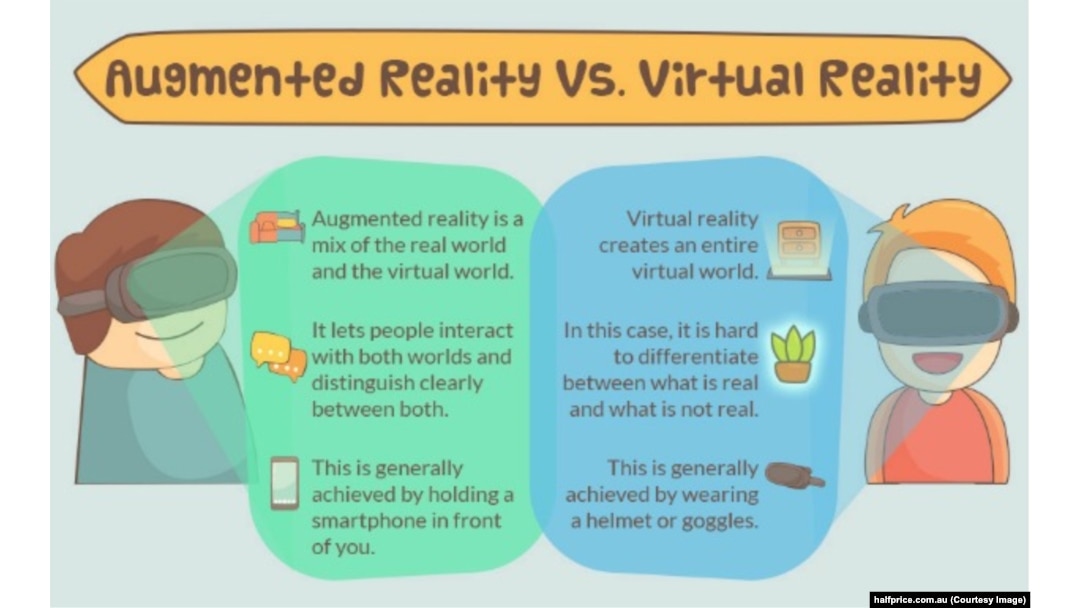
AR vs. VR

Although both of them are quite similar in concept, their user experience is entirely different. To put it simply, VR users can immerse themselves in a new environment, and AR users can experience an enhancement of the world around them. Furthermore, VR users will only be able to interact with the simulated environment whereas AR users can interact with both the real world and simulated world simultaneously. Other than that, the devices used to display both technology are completely different. VR users will typically use a VR headset such as the Oculus and Gear VR, while AR users may be able to use their phone to display the environment. This crucial difference might be an advantage or disadvantage depending on its implementation.

This research blog will further discuss the benefits of implementing VR in the topic “How Gender Stereotypes Affect One’s Career Choices and Work-life.” This topic, in my opinion, is quite sensitive. Empathy is crucial to be able to feel and understand the victim’s struggles. Thus, it is essential to choose the right medium to convey this story to create an impact on the audience. VR would be a suitable medium to use for this topic as users will be able to experience the problem first-hand.


References

https://www.vrs.org.uk/virtual-reality/what-is-virtual-reality.html

https://www.marxentlabs.com/what-is-virtual-reality/

https://electronics.howstuffworks.com/gadgets/other-gadgets/virtual-reality.htm

https://www.pebblestudios.co.uk/2017/08/17/when-was-virtual-reality-invented/#targetText=The%20first%20virtual%20reality%20headset,and%20his%20student%2C%20Bob%20Sproull.

https://learningenglish.voanews.com/a/augmented-reality-versus-virtual-reality/3844772.html

Traditional Gender Roles Affect One’s Work-life

Women face unique barriers in the workplace in terms of development and working experience (Career Research, 2016). These barriers occur due to societal stereotypes about women (e.g., women being caretakers). These stereotypes can influence perceptions and decision making of women’s career opportunity. They may be deemed unfit to specific jobs that are typically not female-dominated.

One barrier is that women are still not given equal opportunities in leadership roles as men even though they make highly competent leaders (Harvard Business Review, 2019). In 2019, women only occupy 29% of senior management roles worldwide (Grant Thorton, 2019); and surprisingly, this statistic is the highest record so far. This contrast in leadership roles happens due to the stigma of women being less capable than men. In some cases, this stigma goes as far as women having to prove their worthiness of leading to their male underlings (B. Sitorus, personal communication, 2019). These male underlings will challenge these women through teasing, and tough situations for their (male underlings) personal judgment.

Another barrier is that women are typically not given job roles that require relocation or heavy traveling. This is due to the evident belief that women carry more household responsibilities than men. Women usually place second in family decision making due to less contribution to the family’s income. On top of that, societal stereotypes also cause women to carry more household responsibilities than men. These working women juggle both their career and their caretaking duties. As a result, women tend to have much consideration when allowed to progress into a higher position requiring relocation or heavy traveling. They tend to answer the opportunity by having to discuss things over with their husbands; while in contrast, it is rare for men to answer by having to discuss with their wives (B. Sitorus, personal communication, 2019).

Aside from that, women also face more career interruptions and gap due to household responsibilities such as parenting. Although this is not necessarily a negative impact on women, it gives them a later start in their career compared to men. Aside from that, men make up only 4.6% of stay-at-home parents, proving that women are still expected to be the caretakers and men the breadwinners (ABC News, 2018). Additionally, women around the world, on average, spend more than twice as many hours as men doing unpaid (household) work (Gates, 2019). This results in women gravitating towards more flexible jobs that allow them to attend to these responsibilities.

societal stereotypes, family & relationships, self perceptions

Society Sets An Expectation of People’s Career Choices Based on Gender

Society tends to have a set idea of what career people will choose based solely on their gender (Whisby, n.d.). For example, men are stereotyped to be authoritative and assertive; thus, men are assumed to be more suitable in leadership type occupations. As for women, they are stereotyped to be more nurturing and sensitive; therefore, they are more suitable in social work occupations (“Career Research,” 2016).

These stereotypes lead to expectations that society has set for each gender from a young age. Children are treated differently by their parents based on their gender. One of the most common examples is through the type of toys they play (e.g., girls are told to play with dolls, while boys with toy cars.) Although gendering toys might not sound absurd, it is found that girls’ toys were associated with physical attractiveness, nurturing, and domestic skill; whereas boys’ toys were rated as violent, competitive, exciting, and somewhat dangerous (Blakemore, n.d.).

Other than parents, peers, and school also play a crucial role in one’s career choices. Humans are social beings and like to belong in a group; thus, other members of the group’s opinion matter to an individual. In this case, gender stereotypes affect gender-based preferences in activities. For example, boys tend to prefer sport activities like soccer classes, and girls prefer arts like dance classes. These tendencies happen as they choose activities that are deemed appropriate based on their gender.

Despite so, other factors need to be put into consideration, such as sex differences, to determine the relation of gender and career choices. 

Sex differences play a considerable role in these stigmas. The existence of sex differences, not to be confused with gender differences, is strictly biological and utterly unrelated to gender discrimination. Sex differences relate to male and female biology, while gender differences refer to the social roles, behaviors, activities, and attributes that we consider appropriate for men and women (Woolfe, 2019). This sex differences could be seen in tendencies within children’s’ toy preferences. According to research done by the City University of London and University College London (2016), children as young as nine-months-old prefer to play with toys specific to their gender. This research suggests that even though there was a variety in between individual children’s preferences, boys tend to prefer male-typed toys, and girls tend to prefer female-typed toys. 

These sex differences cause men to tend to be more things-orientated, and women to tend to be more people-oriented (Woolfe, 2019). This tendency, of course, determines each individual’s career choices. For instance, men make up around 72% of STEM (Science, Technology, Engineering, and Math) education and jobs; while women make up 28% despite women constituting 47% of the workforce (National Girls Collaborative Project, 2018). Due to this, women may be intimidated to pursue the STEM career field or education as it is male-dominated. Aside from that, career choices are also affected by one’s belief in the opportunities of careers they can pursue. Men tend to be more confident in this as they have a more extensive range of opportunities compared to women. 

How Traditional Gender Roles Portrayed in the Media Affect One’s Career Choices

An average human, with a span of 80 years, will spend 13 years of their life working, excluding an extra one year and two months for unpaid overtime (“HuffPost Australia,” 2017). Having a successful and enjoyable career is crucial for one’s state of being and also social status. Although it is an incredibly old-fashioned mindset and people should be valued through their characters; one’s career status and occupation type determine their worthiness. This mindset occurs as society puts an emphasizes on self-esteem and improving interpersonal relations (Dworkin, 2018).

Gender discrimination takes upon many forms, such as sexual harassment and unequal pay gap among genders, and could be found in many aspects of one’s life. The media and society subtly project these seemingly benign yet harmful stigmas about both women and men (e.g., women being nurturing, and men being authoritative). Due to this widespread, it is inevitable not to be influenced when deciding upon essential life choices, such as a career choice.

The media plays a vital role in projecting traditional gender roles in one’s career through gender representation. Representation is essential in deciding one’s career path. By the age of 7, their aspirations appear to be shaped by gender-related stereotypes.

Moreover, forty-five percent of children stated that TV, film, and radio were the most significant factors influencing their career choice or aspiration (Drawing the Future, 2017). For example, in children storybooks, scientists are three times more likely to be portrayed by a man rather than a woman (Caldwell, 2018). This representation reinforces the idea that the science career path and education is a man’s pursuit. To put things in perspective, Brand (2013) stated: “if she can’t see it, she can’t be it.”

Although this lack of gender representation in non-traditional occupations affects both genders, women are affected more significantly than men. Traditional gender roles have already led women into believing that their options are limited. Thus, this lack of representation will limit more of their already limited options.

Final Topic – How Traditional Gender Roles Affect Women’s Career Choices And Work-life

1.1. Topic Overview

Women, in some countries, still do not have the same rights, resources, opportunities, and protections as men due to societal stigmas. Although these stigmas may seem benign (i.e., women being nurturing), women are considered only as caretakers and supporters. To put it in perspective, on average, women around the world spend more than twice as many hours as men doing unpaid (household) work (Gates, 2019). Furthermore, in 2019, 29% of senior management roles are held by women, the highest number ever on record (Grant Thorton, 2019).

Overall, gender inequality is a huge global problem. Even though the issue has been addressed and has significantly improved in recent years, these harmful stigmas against women stay. 

1.2. Research Question

How do traditional gender roles affect women’s career choices and work-life?

1.3. Research Objectives

This research aims to find the correlation in gender stereotyping and career choices. It will also analyze and research the effects of gender stereotyping in women’s work-life and how women respond to the stigmas set by society about non-traditional occupations. 

1.4. Value of Research

This research will explore deeper into how harmful gender inequality limits women’s personal development. Furthermore, it will also give clarity on how harmful gender stereotyping affects women’s career choices and work-life. Other than that, ways to improve the current condition will also be displayed.

Interview Recap – Victim

During the interview I conducted with Ms. Dora Amanda, a victim of harmful gender stereotyping, I asked her these questions:

  1. Have you ever been discriminated due to gender?
  2. In what ways have the experience shape you?
  3. Did said experience motivates you to be better or did it traumatize you instead?
  4. A lot of women have been stereotyped by others: women being weak, sexual objects, incapable, etc. Do you think any of the stereotypes are true? If so, why?
  5. If you were to experience it again, what would you say or do to the person who mistreated you?
  6. Is there any way that we can change people’s minds about these stereotypes?

Findings:

1. Have you ever been discriminated against due to your gender?

It mostly comes from my dad, family-wise at least. However, I do feel that in Indonesian marital life, the husband is always allowed to cheat on the wife as it is within a man’s nature to have a strong libido (sex drive); that’s why women have to tolerate them cheating, which just doesn’t sit right. When women are pitted in such a lose-lose game, the least you could do is to cut your losses and not get too attached to your partner in the first place. Still, despite everything, cheating is an inexcusable act that should be avoided in the first place.

2. In what ways have the experience shaped you?

it gave me a stronger determination to prove myself for sure. It’s wrong in general to have gender discrimination, but you have to admit that everyone is fighting off discrimination in every aspect, and not everyone is going to change their mind (especially in a close minded country like Indonesia) in this time and age right away. But I feel like by starting from ourselves, we can slowly change other people’s points of view because the small seed we can plant now will have a bigger impact in the future. People, in general, want to see proof of a social issue, and while some of them might be dismissive of it, it falls to us to never shut up about it. In a way, being discriminated against has given me more independence and motivated me to prove them wrong. 

3. Did said experience motivates you to be better or did it traumatize you instead?

While it did motivate me to be a better person than I think I would be otherwise, it still is an unpleasant experience that, I have to admit, left quite a scar in me. The way gender norms are wrapped in my head is a bit traumatising to say the least. Having told to believe that me, as a woman, won’t have a partner because of a certain part in my appearance, or being told that being born as a woman, I am an ascribed crybaby. But on the other side, I acknowledge how hard things probably are for the boys of my age who are similarly being told that they have to be mundanely masculine, lest they are stereotyped as gay, or that they couldn’t cry. And that was just about cis people, I have good reasons to believe that people of different sexual orientations are having it even worse! It’s a hard and pointless standard, I wouldn’t wish on such experience to anyone else if possible

4. If you were to experience it again, what would you say or do to the person who mistreated you?

If it comes to my dad, I would probably say none. He’s not old-fashioned but he has his own opinions on certain things, and he would stand by his opinion. He would still listen to other’s opinion and process it as far as he goes, but it’s unlikely that he will accept my opinion. When it comes to other people though, I will definitely voice my displeasure at them. 

5. Is there any way that we can change people’s minds about these stereotypes?

Actually, there is no way to change someone’s view about something unless they experience it themselves. For example, we can talk to atheists and preach about Buddhism, Christianity, etc. but if they don’t experience it themselves, they would simply just refuse to believe in it. I recently watched a documentary on YouTube about birth defects on Pakistani UK people who are a result of first-cousins incest marriage. In that documentary, there is a scene in which one person was presented with facts about the birth defect rates and how it affects children; yet, he kept on denying it as his children do not have any defects. This is proof that we cannot change anyone’s views no matter how much fact we laid out onto them. 

6. A lot of women have been stereotyped by others: women being weak, sexual objects, incapable, etc. Do you think any of the stereotypes are true? If so, why?

I think the only true stereotype about women is women being weaker in regard to the physical aspect. But that doesn’t mean that all women are weaker than men, just that they are physiologically different to a point where it is hard to conclude a fair fight out of the two. For example, in sports, women and men are not allowed to compete against each other, and when they do it’s in pairs. 

7. What about stereotypes regarding men?

Not really, I see men and women as equal. If a man wants to be a financial supporter of the family, regardless of their partner being a husband or a wife, it doesn’t mean that he has to be the only financial supporter while the other only does housework. It really depends on the household’s choice, just remember that your partner also needs to have a say.